
Simple strategies to boost cervical cancer screening rates

Cervical cancer is almost entirely preventable, yet screening rates remain low in many communities throughout the world. Limited awareness and misconceptions play a role and can delay detection of this slow-growing, highly treatable cancer.
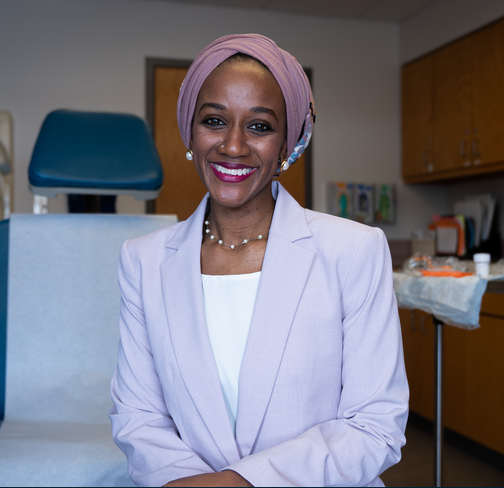
Ilham Umar, MD, MSc
The Center for Global Health at WellSpan Health sponsored a research study at a clinic in Nigeria in 2024. Ilham Umar, MD, MSc, a family medicine resident at WellSpan Health, created and led the study. She delivered a patient education session to identify barriers and improve cervical cancer screening rates.
In this Q&A, Dr. Umar shares what she learned about how health education can change behavior. She offers strategies that primary care providers can use with their patients here at home.
What inspired you to take on this project?
I grew up in Nigeria, where cervical cancer is the second most common cancer affecting women. When I started my residency at WellSpan Health, I wanted to give back to my community there.
In family medicine here, prevention is central to what we do. But in Nigeria, most people see a doctor only when they’re already sick. Preventive care, including Pap smears, is uncommon, even among highly educated people with access to free care. I wanted to see whether health education could make a difference.
What did your study involve?
We offered a health education session at the Central Bank of Nigeria in Abuja, where staff have low screening rates despite free clinic access. Participants were 188 bank staff members: most were people age 30 to 39, and 57% had master’s degrees.
We provided information about what HPV is, how it leads to cervical cancer, what screening involves and why early detection matters. We also addressed common myths because misinformation was widespread.
We used pre- and post-session surveys to measure changes in knowledge and tracked Pap smear completion for three months before and after the session.
What common myths led people to avoid preventive care?
The session provided a safe, judgment-free space where people felt more comfortable asking questions. We learned that some believed Pap smears would be painful or were unsure about the HPV vaccine’s purpose and side effects. Even among this educated group, these misconceptions were strong enough to keep people from getting screened or vaccinated.
Once we understood how much these concerns influenced behavior, we tailored the education session to address them. We also worked with the clinic to improve access, enabling patients to book Pap smears online, skip long urgent care lines and go directly to providers for Pap smears.
What impact did the education session have?
Knowledge improved in eight of 10 areas we measured, and Pap smear uptake increased dramatically. Screenings multiplied from five in the three months before the session, to 32 in the three months after — a sixfold increase.
The biggest driver wasn’t the slides or statistics. It was the safe environment we created. Because people felt comfortable talking about cervical cancer, they were more open to learning and taking action.
How do your findings translate to primary care in the U.S.?
Although the context is different, some issues do carry over. Patients here may also have misconceptions about HPV, cervical cancer and the importance of screening. Even small logistical barriers can discourage them.
Some approaches providers can use in their practices include the following:
- Address misconceptions directly. A quick explanation of cervical cancer, HPV, the HPV vaccine and Pap smears can clear up confusion that might delay care.
- Normalize the discussion. A safe, nonjudgmental space helps patients ask those uncomfortable questions.
- Use the visit you already have. Save time for busy patients by offering to do the Pap smear during the same appointment.
- Get your staff involved. Your team can flag patients due for screening, provide patient-friendly handouts and help answer questions.
How has the Center for Global Health shaped your training and practice?
WellSpan Health’s global health track emphasizes caring for underserved communities, with training in either the U.S. or overseas. That approach has taught me to adapt to resource-limited environments: I’ve learned to be more hands-on and really listen to patients to understand their needs.
My experience in Nigeria taught me how to provide the best possible care despite the challenges. It also helped me appreciate the abundance of resources here and be more intentional about using them well for the patients who depend on us.
Learn more about research at WellSpan Health.